Traduzido por Rosangela Batista
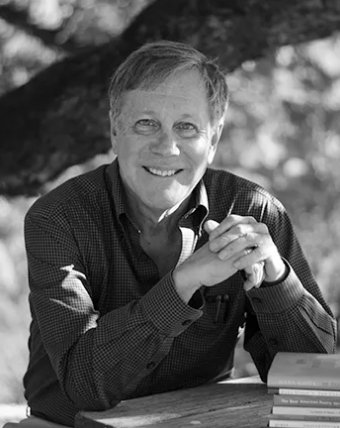
Dana Gioia é um poeta e crítico literário norte-americano. Autor de seis livros de poesia, entre os quais Interrogations at Noon, premiado com o American Book Award em 2001, e 99 Poems: New & Selected (2016), vencedor do Poets’ Prize na categoria do melhor livro do ano. Seu livro mais recente é Meet Me at the Lighthouse (2023). Autor de cinco coletâneas de ensaios críticos que incluem Can Poetry Matter? (2002) e Poetry as Enchantment (2024). Gioia foi Chairman of the National Endowment for the Arts de 2003 a 2009 e California State Poet Laureate de 2015 a 2019. Outros reconhecimentos de sua carreira literária são o Laetare Medal, Presidential Civilian Medal e o Aiken-Taylor Award em Modern Poetry. Dana divide seu tempo entre Los Angeles e Sonoma County, na Califórnia.
“Rough Country,” “Cleared Away,” “Becoming a Redwood,” and “Los Angeles After the Rain” from The Gods of Winter. Copyright © 1991 by Dana Gioia. Translated with the permission of Graywolf Press, Minneapolis, Minnesota, USA, www.graywolfpress.org.
PAISAGEM RÚSTICA
Dê-me uma paisagem feita de obstáculos
de colinas íngremes e blocos glaciares erráticos
onde riachos são propensos a súbito inundar
das campinas e várzeas.
Um lugar
que engenheiros não possam domar, onde estradas
têm que serpentear como videiras pelas escarpas
em penhascos estreitos onde rochedos barram a senda.
Onde troncos de pinheiros torrados por raios,
negros despontam no emaranhado da mata, poleiros
de falcões e corvos em revoada.
E cortantes encostas
onde revoluteando entre a matagal espinhoso,
arranhado e exausto, de repente se encontra
uma cachoeira inesperada,
a menos de meia milha junto à estrada vizinha
um lugar tão difícil de se chegar que ninguém o visita,
um esconderijo, um santuário para libélulas
e ninhais de gaios, sinal de que ainda há
uma gleba de terra que não será possuída.
§
ROUGH COUNTRY
Give me a landscape made of obstacles,
of steep hills and jutting glacial rock,
where the low-running streams are quick to flood
the grassy fields and bottomlands.
A place
no engineers can master–where the roads
must twist like tendrils up the mountainside
on narrow cliffs where boulders block the way.
Where tall black trunks of lightning-scalded pine
push through the tangled woods to make a roost
for hawks and swarming crows.
And sharp inclines
where twisting through the thorn-thick underbrush,
scratched and exhausted, one turns suddenly
to find an unexpected waterfall,
not half a mile from the nearest road,
a spot so hard to reach that no one comes–
a hiding place, a shrine for dragonflies
and nesting jays, a sign that there is still
one piece of property that won’t be owned.
§
VARRIDO DO MAPA
Próximo à esquina pode haver um homem
que loja a loja, quadra a quadra em ruínas,
ainda vê o bairro que existiu aqui um dia,
quem, parado no terreno baldio, pode ouvir
a ausência dos tijolos e vidros estilhaçados
de repente ganharem vida outra vez, que sente
os degraus a se materializarem sob os pés
enquanto sobe o cortiço demolido,
que se eleva com ele ao céu aberto—
andar por andar, além da memória,
cheio dos cheiros de jantares no fogão
e do riso contido dos mortos reunidos.
§
CLEARED AWAY
Around the corner there may be a man
who shop by shop, block by ruined block,
still sees the neighborhood which once was here,
who, standing in the empty lot, can hear
the vacancies of brick and broken glass
suddenly come to life again, who feels
The steps materialize beneath his feet
as he ascends the shattered tenement,
which rises with him in the open air—
story by story, out of memory,
filled with the smells of dinners on the stove
and the soft laughter of the assembled dead.
§
VIRANDO UMA SEQUOIA
Pare por um bom tempo num campo, e os sons
principiar-se-ão de novo. Os grilos, o invisível
sapo a dizer que a mudança é possível,
e toda outra vida minúscula para ser nomeada.
Primeiro um, depois o outro, até ficarem inumeráveis,
eles se tornam uma única voz na colina em veraneio.
Sim, é difícil ficar quieto, hora após hora,
fixo como um mourão de cerca, ouvindo os novilhos
bufando no escuro pasto, cheirando o esterco.
E paralisado pelo mistério de como a pedra
pode suportar ser pedra, e pela dor
que a grama aguenta ao romper a crosta do chão.
Inimaginável as sequoias na colina distante
enraizadas por séculos, a madeira viva crescida
alta e engrossada por cem mil dias-luz.
O velho moinho range em perfeita sincronia
com o vento agitando milhas de pastagens,
e a última luz da casa da fazenda se apaga.
Na vizinhança algo se move. Coiotes caçam
nestas colinas e matilhas de cães selvagens.
Mas ficar aqui à noite é aceitar tudo mais.
Você é sua própria sombra pálida no quarto da lua,
movendo agora mais lento que as estrelas coxas,
parte do luar enquanto a luz lunar se esvai.
Parte da grama que responde ao vento,
parte da vigilância da meia-noite que sabe
que não há silêncio, mas quando o perigo surge.
§
BECOMING A REDWOOD
Stand in a field long enough, and the sounds
start up again. The crickets, the invisible
toad who claims that change is possible,
And all the other life too small to name.
First one, then another, until innumerable
they merge into the single voice of a summer hill.
Yes, it’s hard to stand still, hour after hour,
fixed as a fencepost, hearing the steers
snort in the dark pasture, smelling the manure.
And paralyzed by the mystery of how a stone
can bear to be a stone, the pain
the grass endures breaking through the earth’s crust.
Unimaginable the redwoods on the far hill,
rooted for centuries, the living wood grown tall
and thickened with a hundred thousand days of light.
The old windmill creaks in perfect time
to the wind shaking the miles of pasture grass,
and the last farmhouse light goes off.
Something moves nearby. Coyotes hunt
these hills and packs of feral dogs.
But standing here at night accepts all that.
You are your own pale shadow in the quarter moon,
moving more slowly than the crippled stars,
part of the moonlight as the moonlight falls,
Part of the grass that answers the wind,
part of the midnight’s watchfulness that knows
there is no silence but when danger comes.
§
LOS ANGELES DEPOIS DA CHUVA
De volta para casa, numa das manhãs luminosas
em que a cidade desperta a se ver renascida.
Sem poluição, a tempestade estrondosa
soprada ao mar, os pássaros
em frenesi de tons alegres, e as montanhas,
inaparentes do baço,
ressurgem com o sol.
É uma manhã tomada do Paraíso,
uma visão do deserto que floresceu —
de Eva em sua nudez,
dum Adão imortal inebriado com todas
as cores chamativas do mundo,
e cada sabor e toque, cada
prazer tremendo à espera de ser nomeado.
A cidade se move e se espreguiça
como um jovem ao despertar do amor.
A luz do sol acariciando a pele e o
vento libertino sussurrando:
“Curta o momento. Se renda ao abraço
irrefutável do ar. Confie em mim, hoje,
até a sedução leva ao amor.”
Muitas vozes a passar. Muitos aromas
se misturam no perfume intenso
do verde inverno refrescado pela chuva.
Esta não é uma manhã para decisões.
Um dia a se deixar as responsabilidades, ver
velhos amigos e sonhar
com um amor tranquilo, resoluções impossíveis.
§
LOS ANGELES AFTER THE RAIN
Back home again on one of those bright mornings
when the city wakes to find itself reborn.
The smog gone, the thundering storm
blown out to sea, birds
frantic in their joyous cacophony, and the mountains,
so long invisible in haze,
newly risen with the sun.
It is a morning snatched from Paradise,
a vision of the desert brought to flower—
of Eve standing in her nakedness,
immortal Adam drunk with all
the gaudy colors of the world,
and each taste and touch, each
astounding pleasure still waiting to be named.
The city stirs and stretches
like a young man waking after love.
Sunlight stroking the skin and the
promiscuous wind whispering
“Seize the moment. Surrender to the air’s
irrefutable embrace. Trust me that today
even seduction leads to love.”
Too many voices overhead. Too many scents
commingle in the stark perfume
of green winter freshened by the rain.
This is no morning for decisions.
A day to ditch responsibility, look up
old friends, and dream
of quiet love, impossible resolutions.
Rosangela Batista é uma escritora luso-americana radicada na Flórida. Seus poemas foram publicados nas revistas: The Wallace Stevens Journal, LitBreak, The Westchester Review, Stone Circle Review, Gávea-Brown, Mantis, Quiasmo, e Especiaria.